A collection of the later writings of Arthur Schopenhauer whose âreputation as the bard of pessimism makes him the perfect philosopher for the Covid eraâ (New York Times). Schopenhauerâs writings tap into the anxieties of our modern, uncertain worldâfrom climate change and mental health crises to the threat of mass extinction.
Produced during the last decades of Schopenhauerâs long life, these texts reveal a unique kind of philosophy. Eschewing the tradition of the dry, totalizing philosophy prevalent during his time, Schopenhauerâs later writings mark a shift towards a philosophy of aphorisms, fragments, anecdotes, and observationsâwritten in a literary style that is antagonistic, resigned, confessional, and filled with the fragile contours of an intellectual memoir. Here, Schopenhauer allows himself to pose challenging questions regarding the fate of the human species, the role of suffering, and the rift between self and world that has come to define human existence. It is these writings that later generations of artists, poets, musicians, and philosophers would identify as exemplifying the pessimism of their era, and perhaps of our own as well.
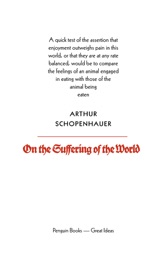
On the Suffering of the World is presented with an introduction that places Schopenhauerâs thought in its intellectual context, while also connecting it to contemporary concerns over climate change, the anthropocene, and the specter of human extinction. Also featuring an overview Schopenhauerâs work and life, this collection is a fascinating look inside the mind of a unique thinker.
On the Suffering of the World - Arthur Schopenhauer & Eugene Thacker
A collection of the later writings of Arthur Schopenhauer whose âreputation as the bard of pessimism makes him the perfect philosopher for the Covid eraâ (New York Times). Schopenhauerâs writings tap into the anxieties of our modern, uncertain worldâfrom climate change and mental health crises to the threat of mass extinction.
Produced during the last decades of Schopenhauerâs long life, these texts reveal a unique kind of philosophy. Eschewing the tradition of the dry, totalizing philosophy prevalent during his time, Schopenhauerâs later writings mark a shift towards a philosophy of aphorisms, fragments, anecdotes, and observationsâwritten in a literary style that is antagonistic, resigned, confessional, and filled with the fragile contours of an intellectual memoir. Here, Schopenhauer allows himself to pose challenging questions regarding the fate of the human species, the role of suffering, and the rift between self and world that has come to define human existence. It is these writings that later generations of artists, poets, musicians, and philosophers would identify as exemplifying the pessimism of their era, and perhaps of our own as well.
On the Suffering of the World is presented with an introduction that places Schopenhauerâs thought in its intellectual context, while also connecting it to contemporary concerns over climate change, the anthropocene, and the specter of human extinction. Also featuring an overview Schopenhauerâs work and life, this collection is a fascinating look inside the mind of a unique thinker.